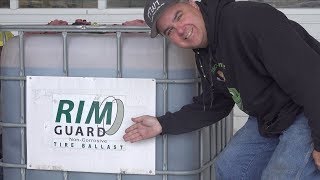
Documents a dealer service visit to have Rim Guard beet juice ballast pumped into a John Deere 1025R's tires, about ten gallons per side. The technician walks through the valve-core removal process step by step, and the host adds context on PSI limits, why liquid ballast beats stacking wheel weights outward, and how filled tires fit into the 1025R's overall ballast strategy. Best for 1025R owners weighing their ballast options.
Tractor Time with Tim is an owner-operator channel focused on compact tractors, presenting projects from a hobbyist homeowner perspective rather than a dealership or professional standpoint.
What this video covers
About ten gallons of Rim Guard beet juice added per tire
Beet juice weighs about eleven pounds per gallon, roughly 110 pounds a side
Valve core removed to drain air, then fluid pumped in through valve stem
Max tire pressure listed in manual is twenty PSI, filled to about sixteen
Beet juice is not corrosive like calcium and is safe for humans and animals
Whole service took about thirty to forty-five minutes start to finish
Questions this video answers
How much Rim Guard ballast goes into a John Deere 1025R tire?
About ten gallons per tire, which works out to roughly 110 pounds of added weight on each side since beet juice weighs about eleven pounds per gallon.
What PSI should a John Deere 1025R tire be filled to after adding Rim Guard?
The manual lists twenty PSI as the max. The host chose about sixteen PSI, noting lower pressure rides smoother but too low risks the rim turning inside the tire under load.
Is beet juice ballast safe and how is it installed in a 1025R tire?
It is safe for humans and animals and not corrosive like calcium. The technician removes the valve core to let air out, pumps in the fluid, then reinstalls the valve core to hold it in.
Is filling tires enough ballast on its own for a John Deere 1025R?
No, filled tires are only part of the ballast solution. The host says you also need wheel weights and three-point hitch weight since the tractor's tires have limited room.