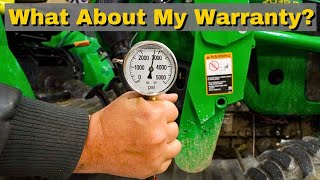
An owner-operator on a John Deere 2038R walks through actually adjusting the hydraulic pressure relief valve, removing it, working it in a vise, and dialing it from roughly 2,800 up to 3,000 PSI, then measures the real-world lift improvement (18 inches to 64 inches with the same load). He also gives a frank, nuanced take on warranty implications. Best for 2038R owners considering this specific modification.
An owner-operator channel where the host documents real work on his own equipment, including mistakes made along the way.
What this video covers
Removes and adjusts pressure relief valve in a vise
Targets 3,000 PSI, matching John Deere's stated limit
Lift height increased from 18 inches to 64 inches
Estimates roughly 300 extra pounds of lift capacity added
Warns modification is not officially recommended, done at own risk
Discusses warranty impact on individual components versus whole tractor
Questions this video answers
How do you adjust the hydraulic pressure relief valve on a John Deere 2038R?
Remove the pressure relief valve, work it in a vise, unscrew it one full turn, tighten it back down, then reinstall and test the lift pressure at full throttle.
Does raising hydraulic pressure on a John Deere 2038R void the warranty?
The owner says it would not void the entire warranty, but if a component like a lift cylinder fails and the dealer can tell pressure was too high, that specific part may not be covered.
How much does increasing hydraulic pressure improve lift height on a John Deere 2038R?
With the same load, lift height went from 18 inches to 64 inches after raising pressure from about 2,800 to 3,000 PSI, an increase of roughly 300 pounds of capacity.
What PSI should you set hydraulic pressure to on a John Deere 2038R?
The target was 3,000 pounds, which is the limit John Deere specifies and also matches the rating of most hoses, fittings, and cylinders.