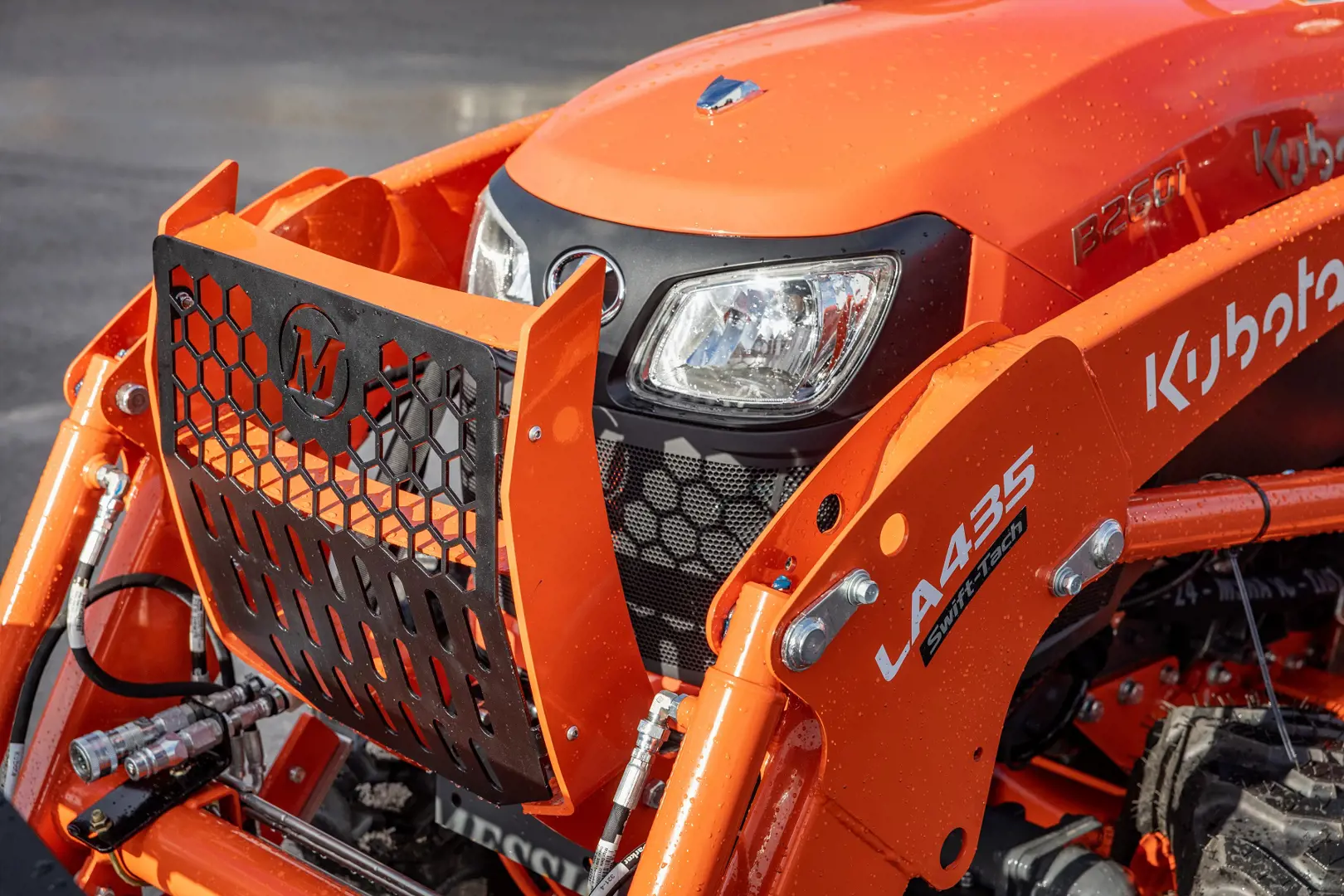
This isn't a repair or walkaround video, it's a safety explainer prompted by the creator's earlier hose-leak fix. Using research and a conversation with a Kubota mechanic, the owner explains hydraulic fluid injection injuries, why you should never check a suspected pinhole leak with bare hands or eyes, how to test with cardboard instead, and notes the B2601's system self-purges air after hose work. Best for new compact tractor owners unfamiliar with hydraulic system risks.
An owner-operator sharing personal research and lessons learned from owning a Kubota B2601, not a mechanic or dealer.
What this video covers
Tractor hydraulic system runs over 2,000 PSI of pressure
Never touch a suspected leak with bare hands
Never lean in close with your eyes to look for a leak
Use a piece of cardboard run along hoses to find leaks
Don't rev the tractor to try to reproduce the leak
B2601 hydraulic system self-purges air after hose work
Questions this video answers
How do you check for a hydraulic hose leak safely on a Kubota B2601?
Take a piece of cardboard and run it along the hydraulic hoses. Even if you can't see clear fluid, it will show up on the cardboard. Never use your hands or lean in close with your eyes.
What is hydraulic fluid injection and why is it dangerous?
It happens when pressurized hydraulic fluid punctures skin, often feeling like just a pinprick or bee sting. Hydraulic fluid contains chemicals that kill human tissue cells if not treated immediately.
Do you need to bleed air from the hydraulic lines after replacing a hose on a Kubota B2601?
No. The system is designed to purge air itself. Tighten the couplings, turn the tractor on, turn the wheel side to side, and cycle the joystick and cylinders to clear air.