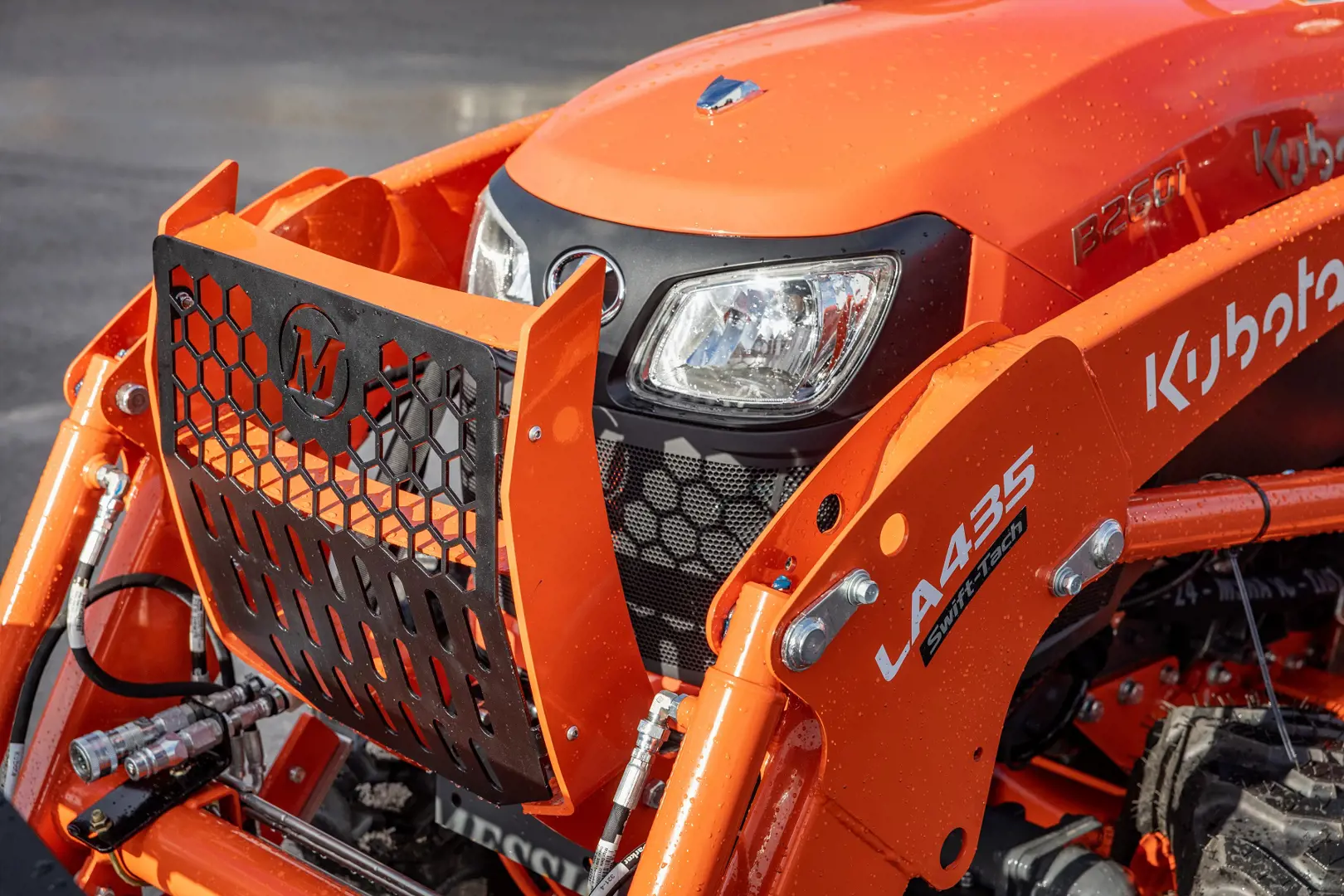
This is a hands-on seasonal tire swap on a personally owned Kubota B2601, switching from R-14s to R-4s using the loader and backhoe stabilizers to lift the tractor instead of jacks. The owner covers wheel spacers for chain clearance, socket sizes (22mm rear, 17mm front), torque specs (110 lb-ft rear, 65 lb-ft front), cross-pattern tightening, and re-torquing after 200 yards. Useful for B2601 owners doing their own tire or wheel work.
An owner-operator with tractor-trailer tire experience sharing his own maintenance process on his personal B2601, not a professional tutorial.
What this video covers
Uses loader and backhoe stabilizers to lift tractor, no jacks
Rear wheel nuts use 22mm socket, front use 17mm
Torques rears to about 110 lb-ft, fronts to about 65 lb-ft
Tightens wheel nuts in a cross pattern to seat evenly
Wheel spacers of 1 3/8 inch needed for chain clearance
Owner's manual recommends re-torquing wheels after 200 yards
Questions this video answers
How do you lift a Kubota B2601 to change tires without a jack?
The owner uses the front loader to raise the tractor and the backhoe stabilizers for the rear, putting blocks underneath before working, instead of using a hydraulic jack.
What torque specs are used for wheel nuts on a Kubota B2601?
The owner's manual gives a range, and he torques the rear wheel nuts to about 110 pound-feet and the front wheel nuts to about 65 pound-feet.
What socket sizes are needed to change wheels on a Kubota B2601?
A 22 millimeter socket is used for the rear wheel nuts and a 17 millimeter deep socket is used for the front wheel nuts.
Why does the Kubota B2601 need wheel spacers?
Wheel spacers, one and three-eighths inches on both sides, are needed for clearance between the inside of the wheel and fender when running chains, and they also add stability.