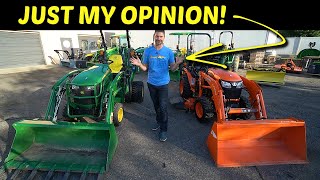
This is the opinion follow-up to a separate facts-only comparison video, so it assumes you've already watched that one. The host shares personal takes on pricing difficulty, loader geometry and lift capacity differences, hood/fender durability, and hydrostatic pedal feel on both machines. It's candid and conversational rather than spec-driven. Best for buyers already familiar with the basic numbers who want one person's unfiltered preference between the two.
Good Works Tractors is a dealership and attachment-retailer channel that sells tractors and ships accessories nationwide, so expect a commercial backdrop even when the content is framed as personal opinion.
What this video covers
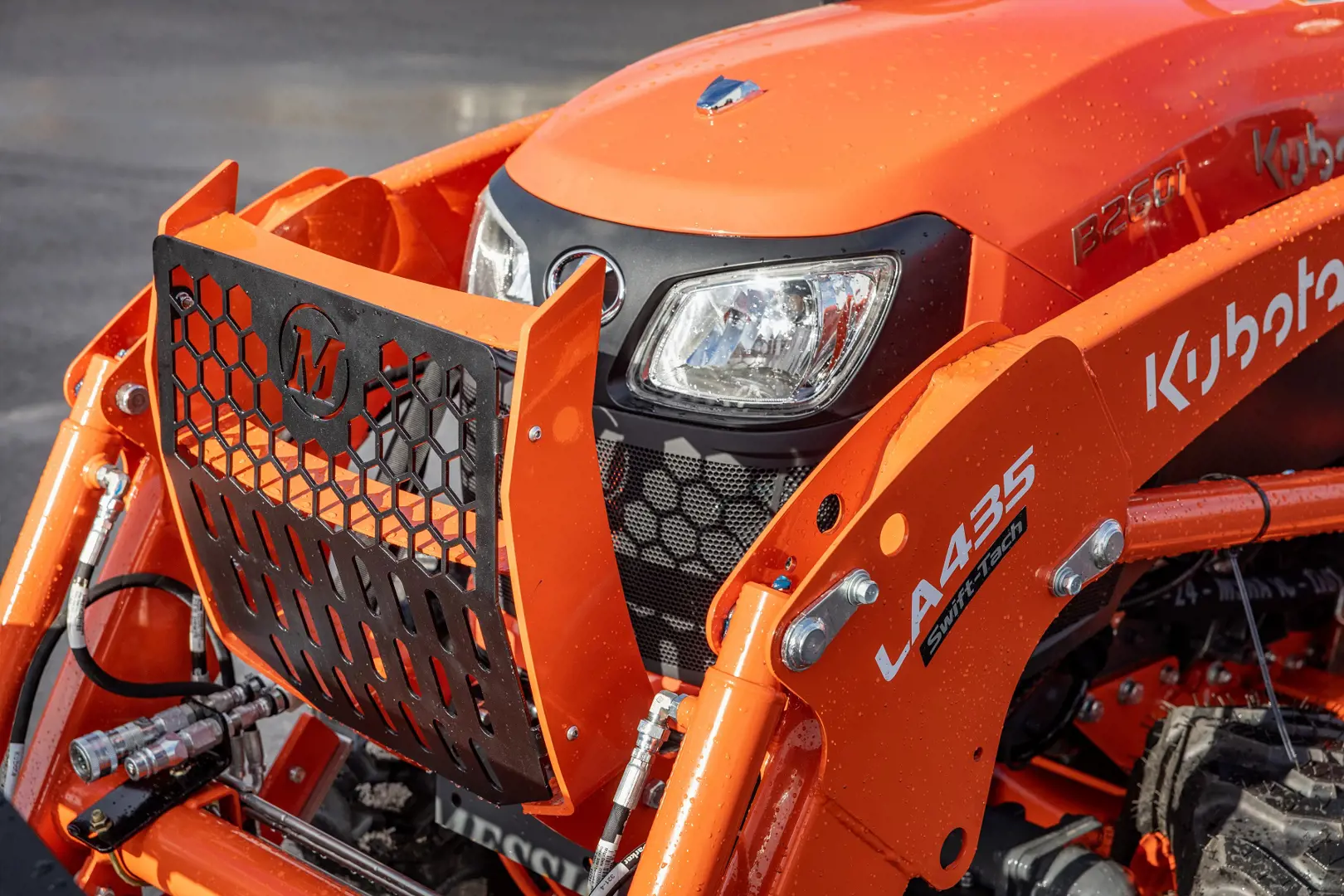
Kubota B2601 lifts about 80 pounds more, 6 inches higher than 1025R
Kubota loader geometry sits further out, reducing lift capacity
John Deere plastic hood/fenders buff out dents better than Kubota's
Kubota treadle pedal pushes down with heel for reverse, host dislikes it
John Deere hydrostatic pedal layout differs from automotive forward/brake feel
Host calls pricing comparison between brands very hard to pin down
Questions this video answers
Does the Kubota B2601 loader lift more than the John Deere 1025R?
Yes, it lifts roughly eighty pounds more and about six inches higher to full height, though this didn't account for a tooth bar on one unit.
Why does the host think Kubota loaders lift less weight than they should?
He feels Kubota loader and three-point geometry sits further out from the tractor base than John Deere's, and physics means more distance from the lift point reduces capacity.
How does the hydrostatic pedal feel compare between the John Deere 1025R and Kubota B2601?
On the Kubota you push down with your heel for reverse, which the host hates. On the John Deere the forward/reverse layout isn't like a car's pedals either. He calls it a wash, saying both are flawed.
Does the John Deere 1025R hold up better than the Kubota in hood and fender durability?
The host says John Deere plastic buffs out scratches and dents more easily, noting a five inch tree fell on his and nothing happened, while Kubota panels show dents more.