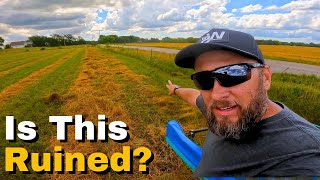
A first-time hay farmer documents what happened when half an inch of unexpected rain hit his cut hay mid-bale. The video covers how to assess bottom-moisture damage, the decision to ted versus re-rake, and a practical tedder demonstration across thirty acres. It also spends real time on the 'trash hay' debate, low-quality mixed-grass fields and whether soil treatment pencils out. Best for small-acreage beginners facing the same situation.
Brock at Rock Hill Farm is an owner-operator sharing first-hand experience from his own property, and he's candid about being in his first season of baling his own hay.
What this video covers
Half an inch of rain fell mid-baling on raked hay
Flip a row over to check if the bottom feels wet
Wet top dries fine, wet bottom holds moisture and can rot
Tedder spreads hay out instead of leaving a windrow
Rake can convert to a tedder with a lever and cam
Ted thirty acres, plan to rake again the next day
Questions this video answers
How do you know if rained-on hay is safe to bale?
Flip a row over and feel underneath. If the top is wet it will dry fine, but if the bottom is wet it holds moisture longer and can rot or mold before baling.
What do you do with hay after it rains before baling?
If the bottom is wet, flip it and let it sit another day or two, then run a tedder over it to spread it out and help it dry faster.
Can a hay rake be used as a tedder?
Yes, some rakes have a lever that shifts a cam so the rake stays down through the turn and lifts behind the machine, spreading hay instead of windrowing it.
Is low quality mixed-grass trash hay worth baling?
Local farmers said cows still eat it and it sells for close to normal price, though treating fields with lime and fertilizer may or may not be cost justified depending on time and equipment costs.