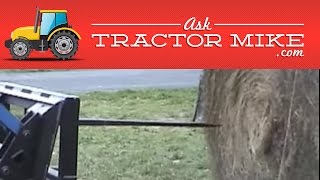
A short explainer focused on one specific decision: bale spike versus bale fork. Mike walks through the physical differences, explains why modern tight bales demand a narrow high-tensile 'super penetrator' spike, and notes the bale fork costs roughly $200 more but doubles as emergency pallet forks. Practical cautions about reach and accidental barn damage are included. Best for newcomers deciding which attachment to buy first.
Tractor Mike is a longtime tractor-industry insider with decades of hands-on experience in the equipment business. He built his channel to help first-time and rural buyers make confident decisions, and his guidance comes from that deep, long-term background rather than a sales pitch.
What this video covers
Bale spike has one big spike plus two stabilizers
Modern tight bales need a narrow high-tensile super penetrator spike
Bale fork costs about $200 more than a spike
Bale fork can double as emergency pallet forks
Bale forks stick out further in front than expected
Avoid using bale fork to pull out tree roots
Questions this video answers
What is the difference between a bale spike and a bale fork?
A bale spike has one big spike with two small stabilizers and only spikes bales. A bale fork has two spikes and can also work as emergency pallet forks.
Why do you need a super penetrator spike for modern hay bales?
New bales are tighter than old loose bales, so a thick spike may just push the bale instead of piercing it. A narrow, high-tensile spike is needed.
Is a bale fork worth the extra cost over a bale spike?
It costs about $200 more but doubles as pallet forks in an emergency, giving it more versatility than a plain bale spike.
What should you watch out for when using a bale fork?
It sticks out further in front of the tractor than expected, so turning too fast can cause accidental damage like hitting barn siding.