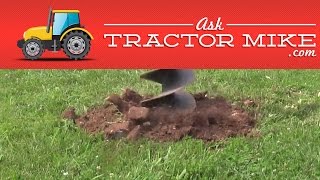
Mike draws on personal orchard history to frame this as a practical operator's guide rather than a spec rundown. It covers real-world technique (positioning before you dig, handling rocks, combining overlapping holes), safety warnings about the spinning auger and heavy gearbox, storage options with honest critique of each, a custom stand design, and a brief hookup walkthrough. Best for first-time post-hole-digger buyers who want candid, experience-based guidance.
Tractor Mike is a longtime tractor-industry insider with decades of hands-on experience in the equipment business. He built his channel to help first-time and rural buyers make confident decisions, and his guidance comes from that deep, long-term background rather than a sales pitch.
What this video covers
Pull a few inches forward of the target spot before lowering auger
Keep tractor in neutral in case you hit a rock
Dig two overlapping holes and shovel out the middle for bigger holes
Never store a post hole digger flat on the ground
Hang from a rafter or tree, or use a custom stand
Hook up main frame first, then lower links, then PTO last
Questions this video answers
Why shouldn't you stand near a spinning post hole auger?
It is one of the most dangerous farm tools because a large spinning auger cannot be stopped by a human being, so you should never get near it.
What is the best way to store a post hole digger?
A handy stand that locks the auger in one place works best; storing it flat on the ground is worst since the heavy gearbox can fall on you.
How do you hook up a post hole digger to a tractor?
Hook up the main frame first where the top link usually goes, then hook up the two lower link arms, then put the PTO in last, with the tractor off.
How do you dig a bigger hole with a post hole digger?
Dig one hole, back up a bit and dig a second hole near it, then get in with a shovel and knock out the middle part and remove the dirt.